Big holders and 13F filings (HDS, 13F)
HDS shows a stock's biggest institutional holders from quarterly 13F filings, and 13F browses the funds themselves: holdings, changes, crowded positions and estimated performance.
- 4 min
- 3 questions
- Lesson 1 of 4
Why you would care
Which big investors own this, and what did they do last quarter? "Berkshire bought more of X." "Hedge funds piled into Y last quarter." These headlines come from 13F filings. Knowing who owns a stock tells you who might sell it in a hurry, and what the professionals did, three months ago.
The idea from scratch
An institutional investor manages money for others: mutual funds, pension funds, hedge funds, banks, insurers (chapter 01, Who is who on Wall Street).
US law (section 13(f) of the Securities Exchange Act) requires every investment manager with at least 100 million dollars in US-listed stocks and similar securities to file a Form 13F each quarter. It lists each position: the security, the number of shares, the market value at quarter end.
What a 13F shows, and what it hides:
| Shows | Hides |
|---|---|
| Long stock positions at quarter end | Short positions |
| Listed options (as the value of the underlying shares) | Cash, bonds, most foreign stocks |
| Changes from one quarter to the next | Everything that happened during the quarter |
And it arrives late: managers have 45 days after the quarter ends to file. A 13F for June 30 can arrive in mid-August.

See it in Gloom
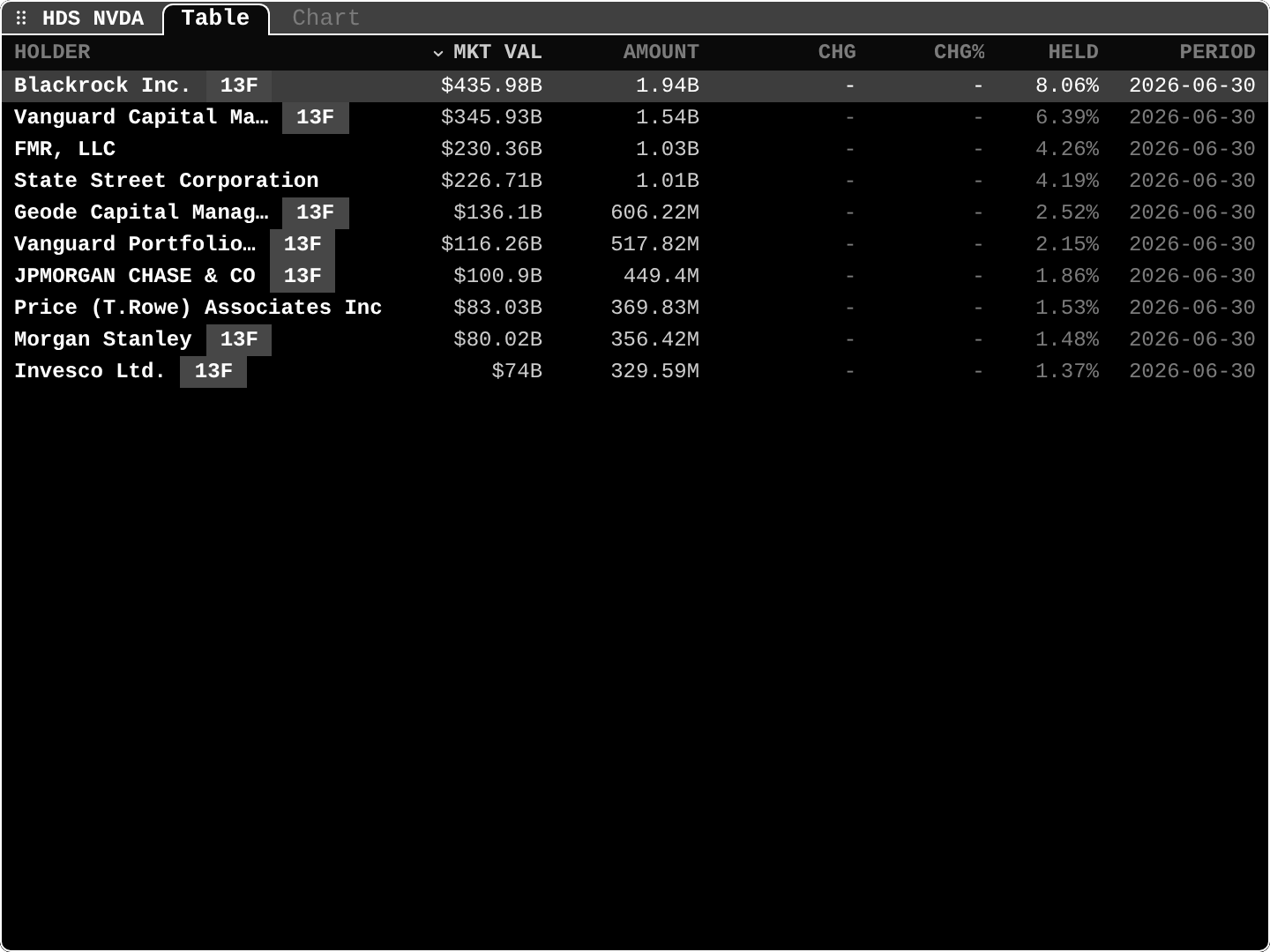
open ittype HDS NVDA. Tabs: Table and Chart (an ownership treemap). o opens a holder's 13F.
Blackrock Inc. 13F $435.98B 1.94B ... 8.06% 2026-06-30: the largest holder owns 1.94 billion shares, about 8% of NVIDIA, worth 436 billion dollars at quarter end.- The
13Fbadge: this holder's filing can be opened in the13Ffunction. CHGandCHG%: shares added or sold since the previous quarter (-here: no change recorded).HELD: share of the company's outstanding shares.PERIOD 2026-06-30: the quarter end of the filing, not today.
13F alone lists funds; 13F Berkshire finds one. The Funds tab shows each fund's latest period, an estimated 13F return (how its reported long holdings would have performed), its reported value and past quarters; the Crowding tab ranks stocks by how many funds newly bought, exited, added or cut them. f opens the filing.
Practice and recap
Try it3 tasks
- In the screenshot, how much of NVIDIA do the top three holders own together? (8.06 + 6.39 + 4.26 = about 18.7%.)
- A quarter ends on September 30. By when must the 13F be filed? (Within 45 days: mid-November.)
- Why can't a 13F tell you a hedge fund is betting against a stock? (Short positions are not reported.)
Common mistakes4 mistakes
- Treating 13F data as current. It is up to 4.5 months old when you read it.
- Copying a fund without knowing its shorts, hedges and timing.
- Reading index funds' huge stakes as conviction. They own everything in the index.
- Comparing an estimated 13F return with the fund's real return; fees, cash, shorts and trading are missing.
Check yourself3 questions
- Who must file a 13F?
- Name two things a 13F does not show.
- What does
HELD 8.06%mean?
Answers
- US investment managers with at least 100 million dollars in qualifying US securities.
- Any two: short positions, cash, bonds, most foreign stocks, trades within the quarter.
- The holder owns 8.06% of the company's outstanding shares.
Words in this lesson6 words
- institutional investor
- A firm that invests other people's money.
- 13F
- The quarterly holdings report large US managers must file.
- holder
- An owner of shares.
- shares outstanding
- All the shares a company has issued and not bought back.
- crowding
- Many funds owning or buying the same stock.
- filing lag
- The delay between the date of the data and its publication.
Educational material about reading market data, not investment advice.